









How to Get Rid of Pond Muck and Sludge Naturally
Few pond problems feel as frustrating as stepping near the edge of your pond and feeling your foot sink into soft, smelly muck. The water may still look fine from a distance, but once you get close to the shoreline, dock, beach, waterfall area, or pond bottom, the problem becomes obvious.
Pond muck is messy. It smells. It makes swimming areas unpleasant. It can make a beautiful pond feel neglected even when you care about it. And for koi pond and backyard pond owners, heavy sludge can also become a sign that too much organic waste is collecting in the system.
The good news is that most pond muck is not mysterious. It is usually organic waste that has settled and started breaking down at the bottom. With the right treatment plan, you can reduce it naturally using beneficial bacteria, enzymes, sludge removers, and targeted muck treatments.
This guide explains what pond muck is, why it builds up, and how to choose the right treatment product for your pond, lake, shoreline, dock, beach, koi pond, or water garden.
Quick Answer: Which Pond Muck Treatment Should You Use?
The best pond muck treatment depends on where the sludge is building up. A lakefront shoreline, a koi pond with rocks and gravel, and a small backyard water garden do not always need the same product.
For Shorelines, Docks, Beaches & Large Ponds
Use targeted muck tablets or lake sludge treatments that sink directly to the bottom and work where the organic muck is sitting.
For Backyard Ponds, Koi Ponds & Water Gardens
Use pond sludge removers designed for smaller systems, rocks, gravel, filters, and organic debris from fish waste, leaves, and dead algae.
For Heavy Organic Bottom Waste
Use a stronger muck or sludge treatment program and stay consistent. Heavy muck usually took months or years to build up, so it normally needs repeated treatments.
For Ongoing Maintenance
Use a regular bacteria-based maintenance product to help prevent sludge from building back up after the pond is under control.
Simple rule: Use lake and shoreline muck products for large, open-bottom areas. Use pond sludge removers for koi ponds, backyard ponds, rocks, gravel, filters, and smaller water gardens.
What Is Pond Muck?
Pond muck is the soft organic sludge that collects at the bottom of a pond, lake, beach area, or shoreline. It is usually made from natural debris that sinks and slowly breaks down over time.
Common sources of pond muck include:
- fallen leaves
- dead algae
- fish waste
- uneaten fish food
- decaying aquatic plants
- grass clippings and shoreline debris
- twigs, pollen, and other organic matter
As this material settles, it forms a soft bottom layer. In small amounts, some organic sediment is normal. The problem starts when the layer gets thick, smelly, black, or unpleasant to walk through.
Important: Muck is not always the same as clay, sand, or mineral sediment. Bacteria-based sludge removers work best on organic muck such as leaves, dead algae, fish waste, and decomposing plant matter. They will not magically remove rocks, sand, clay, or inorganic dirt.
Why Does Muck Build Up in Ponds and Lakes?
Pond muck builds up when more organic material enters the water than the pond can naturally break down. This is especially common in ponds under trees, ponds with fish, older backyard ponds, natural lakes, shallow shorelines, and areas with poor water movement.
Leaves & Plant Debris
Every leaf that sinks becomes part of the bottom layer. Over time, fall leaves, dead lilies, pond plants, and shoreline vegetation can create a thick organic blanket.
Fish Waste & Uneaten Food
Koi and goldfish add beauty and life to a pond, but they also add waste. Overfeeding makes the problem worse because uneaten food sinks and decomposes.
Dead Algae
When algae dies, it does not disappear. It sinks. If the pond has repeated algae blooms, that dead algae can become a major part of the muck layer.
Poor Circulation
Quiet corners, shallow coves, and areas with little water movement collect debris faster. These are often the first places where muck becomes noticeable.
Low Oxygen at the Bottom
Beneficial bacteria need oxygen to work efficiently. When the bottom layer has low oxygen, organic waste breaks down more slowly and can produce unpleasant odors.
Years of Buildup
Many ponds do not have one “bad week.” They have years of leaves, fish waste, and dead algae slowly collecting at the bottom.
Best mindset: Muck control is not just about cleaning what is already there. It is also about reducing the amount of new organic waste that sinks every season.
Why Is Pond Muck a Problem?
Some bottom sediment is normal in natural ponds and lakes. But heavy organic muck can make the pond unpleasant, harder to maintain, and less enjoyable for people and fish.
It Can Smell Bad
Thick organic muck can produce swampy or rotten odors, especially in warm weather or areas with low oxygen.
It Makes Shorelines Unpleasant
For lakefront owners, the biggest complaint is often simple: the water looks beautiful, but the bottom feels soft, dirty, and uncomfortable near the dock or beach.
It Can Feed Algae Problems
Organic muck can release nutrients back into the water. More nutrients can contribute to recurring algae and cloudy water problems.
It Reduces Depth Over Time
As organic material keeps accumulating, shallow areas can become even shallower. This is especially noticeable in older ponds and shoreline zones.
Bottom line: Muck is not just ugly. It is a sign that organic waste is collecting faster than the pond can naturally process it.
How Do Pond Muck and Sludge Removers Work?
Most quality pond muck treatments are not harsh chemicals. They are usually beneficial bacteria, enzymes, or oxygen-supporting treatment packs designed to help break down organic waste naturally.
Bacteria
Beneficial bacteria help digest organic waste such as leaves, dead algae, fish waste, and plant debris. They are the main biological workers in many muck treatments.
Enzymes
Enzymes help speed up the breakdown process by making organic material easier for bacteria to consume.
Targeted Delivery
Tablets, pellets, packs, and blocks are designed to sink or dissolve near the sludge layer, so the treatment reaches the problem area instead of floating away.
These products work gradually. They do not vacuum the pond. They do not dredge the bottom. Instead, they help the pond’s natural biological process work harder and more efficiently.
Realistic expectation: A bacteria-based muck remover is not an overnight fix for ten years of sludge. The best results usually come from consistent dosing, warm water, good oxygen, and reducing new debris.
Tablet, Liquid, Pack, Pellet, or Block: What Is the Difference?
Different sludge removers use different delivery formats. The format matters because it affects where the product goes and how easy it is to apply.
Tablets
Tablets are easy to toss into specific problem areas. They are especially useful for shorelines, docks, beaches, shallow zones, and targeted muck spots.
Good examples: CrystalClear MuckOut, CrystalClear MuckOff, ClearLake™ Muck Eliminator Tablets, SuperNatural MuckRid.
Water-Soluble Packs
Packs are convenient and clean to handle. They dissolve in the water and are often used for ongoing pond or lake sludge programs.
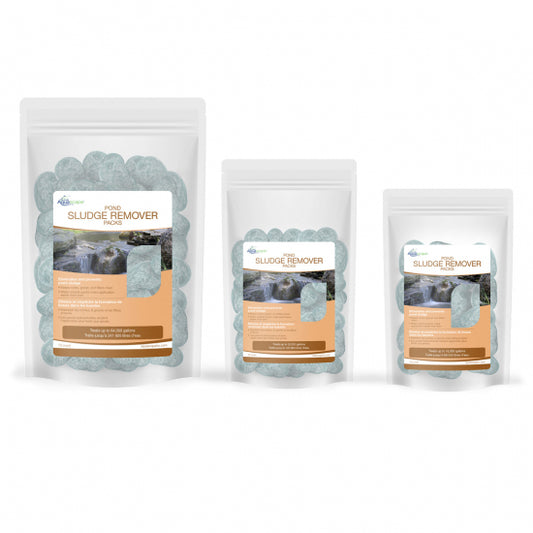
Good examples: Aquascape Lake Sludge Remover, Aquascape Pond Sludge Remover Packs.
Liquid Treatments
Liquid sludge removers spread through the pond and are useful for backyard ponds, koi ponds, rocks, gravel, and areas where sludge collects in hard-to-reach spaces.
Good example: Microbe-Lift Sludge-Away.
Pellets & Blocks
Pellets and blocks are useful when you want a sinking treatment that stays near the bottom. Blocks are often better for slower, ongoing maintenance.
Good examples: EasyPro Sludge Remover Pellets, EasyPro Sludge Remover Bacteria Blocks.
Practical rule: For a specific muddy shoreline, tablets or pellets usually make sense. For a koi pond with rocks, gravel, and filter areas, liquid or pond sludge packs are often easier to work into the whole system.
Best Muck Treatments for Lakes, Shorelines, Docks, and Beaches
For lakefront properties and larger ponds, the main problem is usually not a small filter full of sludge. It is the soft organic layer along the shoreline, under the dock, near the beach, or across shallow bottom areas.
CrystalClear MuckOut
CrystalClear MuckOut is one of the strongest choices for pond and lake muck along shorelines, docks, beaches, and shallow areas.
It uses concentrated beneficial bacteria and enzymes in easy toss-in tablets. This makes it very practical when you want to target a specific zone instead of treating only the water column.
Best for: lakefront muck, dock areas, beaches, shorelines, large ponds, shallow organic sludge.
ClearLake™ Muck Eliminator Tablets
ClearLake™ Muck Eliminator Tablets are another strong option for targeted pond and lake muck treatment.
The tablet format is useful when you want direct bottom contact in high-traffic areas such as docks, swimming spots, beach entries, and shoreline zones.
Best for: targeted muck zones, pond bottoms, lake bottoms, shorelines, docks, beaches.
ClearLake™ Muck Eliminator
ClearLake™ Muck Eliminator is a good fit when you want a pond or lake muck program in water-soluble bags rather than individual tablets.
This format works well for broader treatment areas where you want convenient dosing across larger sections of the pond or lake.
Best for: larger treatment zones, full-pond programs, organic bottom waste, odor reduction.
SuperNatural MuckRid
SuperNatural MuckRid is a bacteria and enzyme-based tablet treatment for muck, sludge, and organic debris at the bottom of ponds.
It is a good alternative when you want a simple toss-in product for organic bottom buildup caused by leaves, twigs, fish waste, and similar debris.
Best for: organic sludge, bottom debris, general muck reduction, pond bottoms.
Aquascape Lake Sludge Remover
Aquascape Lake Sludge Remover is designed for lakes and large ponds where organic sludge is more widespread.
It uses water-soluble packs that target the sludge layer and are easy to apply as part of a larger pond or lake maintenance program.
Best for: lakes, large ponds, organic sludge layers, odor control, ongoing large-waterbody maintenance.
EasyPro Sludge Remover Pellets
EasyPro Sludge Remover Pellets are sinking pellets designed to break down organic sludge in ponds and lakes.
This format can be useful when you want a bottom-focused treatment that sinks into problem areas rather than staying near the surface.
Best for: pond and lake bottoms, fish waste, dead algae, uneaten food, leaves, organic sludge.
Best lakefront starting point: For a dock, beach, or shoreline with soft organic muck, start with CrystalClear MuckOut, ClearLake™ Muck Eliminator Tablets, or SuperNatural MuckRid.
Best Sludge Removers for Backyard Ponds, Koi Ponds, and Water Gardens
Backyard ponds and koi ponds usually have a different sludge problem than lakes. The muck often collects between rocks, in gravel, around plant shelves, in filters, and in quiet corners of the pond.
CrystalClear MuckOff
CrystalClear MuckOff is a great fit for smaller ponds, koi ponds, water gardens, and ornamental ponds.
It is designed to sink to the bottom and help break down muck and sludge caused by dead algae, leaves, and fish waste.
Best for: backyard ponds, koi ponds, small ponds, rocks, gravel, organic bottom sludge.
Aquascape Pond Sludge Remover Packs
Aquascape Pond Sludge Remover Packs are easy-to-use water-soluble packs for pond sludge and muck buildup.
They are especially helpful for spot treatments and ongoing maintenance in areas where fish waste, decaying plants, and organic debris collect.
Best for: pond bottoms, rocks, gravel, filter areas, water gardens, maintenance dosing.
Microbe-Lift Sludge-Away
Microbe-Lift Sludge-Away is a concentrated liquid treatment for organic muck, fish waste, and decaying leaves.
Because it is liquid, it is especially useful in ponds with rocks, gravel, and hard-to-reach sludge pockets where tablets may not reach every crevice.
Best for: rock-bottom ponds, gravel-bottom ponds, koi ponds, spring cleanups, fall cleanup, poor circulation areas.
EasyPro Sludge Remover Bacteria Blocks
EasyPro Sludge Remover Bacteria Blocks provide a simple sinking treatment for organic muck in lakes and ponds.
Blocks are best thought of as a steady maintenance option rather than the first choice for someone trying to attack a very specific shoreline problem fast.
Best for: ongoing maintenance, pond bottoms, organic debris, slower-release biological support.
Backyard pond tip: In koi ponds and water gardens, sludge control usually works best when treatment is combined with regular filter cleaning, removing excess leaves, and avoiding overfeeding.
MuckOut vs MuckOff: What Is the Difference?
CrystalClear MuckOut and CrystalClear MuckOff sound similar, and both are used for muck and sludge. The main difference is where they fit best.
CrystalClear MuckOut
MuckOut is the better choice for larger muck problems in ponds and lakes, especially around shorelines, docks, beaches, and shallow zones.
Choose MuckOut when the customer says:
- “The bottom near my dock is soft and smelly.”
- “Our beach area has muck underfoot.”
- “The shoreline has years of sludge buildup.”
- “I need something for a larger pond or lake area.”
CrystalClear MuckOff
MuckOff is the better choice for backyard ponds, koi ponds, water gardens, and smaller ornamental ponds.
Choose MuckOff when the customer says:
- “There is sludge between my pond rocks.”
- “My koi pond has dead algae and fish waste on the bottom.”
- “I need an easy tablet for my backyard pond.”
- “The pond is not huge, but it gets dirty fast.”
Easy way to remember: MuckOut is more lake, shoreline, dock, and beach focused. MuckOff is more backyard pond, koi pond, water garden, rocks, and gravel focused.
How Long Do Pond Muck Treatments Take to Work?
Muck removers work gradually because they rely on biological breakdown. You may notice odor reduction or cleaner problem areas sooner, but visible sludge reduction usually takes time.
Results depend on:
- how much muck is already there
- water temperature
- oxygen levels
- pond depth and circulation
- how much new debris enters the pond
- whether the product is dosed consistently
Light Sludge
Light sludge or seasonal buildup is usually easier to improve. This is common in smaller ponds after spring start-up or fall leaf drop.
Heavy Muck
Heavy muck that has built up for years usually needs a full treatment season or repeated dosing. One application may help, but it should not be treated like a miracle cure.
Temperature matters: Beneficial bacteria are much more active in warmer water. Many muck products work best when the pond is not cold. Always follow the product label for temperature and dosing instructions.
Common Mistakes When Treating Pond Muck
Most muck treatment failures happen because the wrong product was used, expectations were unrealistic, or new organic debris kept entering the pond faster than the treatment could break it down.
Expecting Overnight Results
Bacteria treatments need time. If the muck took years to build up, it will not disappear after one weekend.
Treating Mineral Sediment Like Organic Muck
Bacteria can break down organic waste. They cannot digest sand, clay, stones, or inorganic dirt.
Using Pond Products in a Lake Situation
A small pond sludge remover may not be the best choice for a large lakefront shoreline. For docks, beaches, and larger water bodies, use lake or shoreline-focused products.
Ignoring Leaves
Every new leaf that sinks becomes future sludge. If the pond is under trees, muck treatment should be paired with better seasonal debris control.
Overfeeding Fish
Uneaten fish food quickly turns into organic waste. Feeding more than fish can eat adds directly to the sludge problem.
Stopping Too Early
One treatment may start the process, but ongoing muck control usually requires a schedule. Follow the product label and stay consistent.
Best practice: Treat the existing organic muck, reduce new debris, and keep the pond biologically active. That is how sludge control becomes long-term instead of temporary.
Suggested Treatment Plan by Pond Type
Situation 1: Lakefront Dock or Beach Has Soft Muck
Use a targeted shoreline product such as CrystalClear MuckOut, ClearLake™ Muck Eliminator Tablets, or SuperNatural MuckRid. Apply directly to the problem area and continue according to the label.
Situation 2: Large Pond Has Bottom Sludge and Odor
Use a large-pond or lake-focused treatment such as Aquascape Lake Sludge Remover, ClearLake™ Muck Eliminator, or EasyPro Sludge Remover Pellets.
Situation 3: Koi Pond Has Sludge Between Rocks and Gravel
Use Microbe-Lift Sludge-Away, Aquascape Pond Sludge Remover Packs, or CrystalClear MuckOff. These are better matched to smaller ponds, rocks, gravel, and organic waste pockets.
Situation 4: Seasonal Spring or Fall Cleanup
Use Microbe-Lift Sludge-Away for organic bottom cleanup, especially after leaves, dead algae, or winter debris have collected. For smaller ponds, Aquascape Pond Sludge Remover Packs are also a clean and easy option.
Situation 5: Maintenance After the Pond Is Under Control
Use a steady maintenance product such as EasyPro Sludge Remover Bacteria Blocks, Aquascape Pond Sludge Remover Packs, or Microbe-Lift Sludge-Away as part of a regular pond care routine.
FAQ: Pond Muck and Sludge Removers
What is the best pond muck remover?
For lakefront shorelines, docks, beaches, and large ponds, CrystalClear MuckOut, ClearLake™ Muck Eliminator Tablets, and SuperNatural MuckRid are strong options. For backyard ponds and koi ponds, CrystalClear MuckOff, Aquascape Pond Sludge Remover Packs, and Microbe-Lift Sludge-Away are usually better matched.
Can bacteria remove pond muck?
Yes, bacteria-based muck removers can help break down organic muck such as leaves, dead algae, fish waste, uneaten food, and decaying plant material. They work gradually and perform best when used consistently in suitable water temperatures.
Will muck remover work in cold water?
Most beneficial bacteria treatments work slower in cold water. For best results, check the product label and use the treatment when water temperatures are within the recommended range.
Is pond muck dangerous?
A small amount of organic sediment is normal. Heavy muck can become a problem when it creates odor, feeds algae, reduces depth, or contributes to poor bottom conditions. In fish ponds, heavy sludge should not be ignored because it can affect overall water quality.
Are pond sludge removers safe for fish?
Most products in this guide are designed to be safe for fish, plants, pets, and wildlife when used as directed. Always follow the dosing instructions and never assume that adding extra product will make it work faster.
Do I need to remove muck physically first?
If the pond has a very thick layer of leaves, weeds, or heavy debris, physical removal can help. Bacteria treatments are excellent for organic sludge, but they should not be expected to instantly consume large piles of fresh leaves or plant matter.
Is sludge remover the same as algaecide?
No. Sludge removers are mainly for organic bottom waste. Algaecides target algae. Dead algae can become part of the sludge layer, so after an algae problem, a sludge treatment may help with the organic waste left behind.
What is the best sludge remover for a koi pond?
For koi ponds, look at Microbe-Lift Sludge-Away, Aquascape Pond Sludge Remover Packs, or CrystalClear MuckOff. These products make more sense for rocks, gravel, filters, fish waste, and smaller backyard pond systems.
Final Thoughts: The Right Product Depends on the Pond
Pond muck can make a beautiful pond feel disappointing. It is the soft shoreline you do not want to step into, the smell you notice on hot days, the sludge hiding between rocks, and the reminder that organic waste has been building up quietly over time.
But the solution does not need to be complicated. Match the product to the situation:
- Use CrystalClear MuckOut for shorelines, docks, beaches, and larger pond or lake muck.
- Use CrystalClear MuckOff for backyard ponds, koi ponds, and water gardens.
- Use ClearLake™ Muck Eliminator Tablets or ClearLake™ Muck Eliminator for pond and lake bottom muck programs.
- Use SuperNatural MuckRid for a simple bacteria and enzyme tablet option.
- Use Aquascape Lake Sludge Remover for lakes and large ponds.
- Use Aquascape Pond Sludge Remover Packs for smaller ponds and ongoing sludge maintenance.
- Use Microbe-Lift Sludge-Away for liquid sludge treatment in koi ponds, rock-bottom ponds, and hard-to-reach sludge pockets.
The best approach is not to panic and throw random products into the water. Start with the type of pond you have, identify where the muck is collecting, choose the right treatment format, and stay consistent.
Cleaner pond, better experience: When muck is under control, the pond looks better, smells better, feels better underfoot, and becomes easier to enjoy all season.
Tags: